Category Archives: Uncategorized
UPDATE
I wanted to apologize to my FIVE followers that I haven’t posted in a while. I was in the process of getting a new blog/website since finishing my 200 hour yoga teacher training and it didn’t work out. So with a fresh new look, I’m back on my Wednesday posts. I’m also happy to see your ideas for something to critique from a feminist lens.
I like beer. In fact, I loved micro-brews and Imports in college. Amstel Light was one of my favorites. And I’m still a sucker for an occasional Poor Man’s Black Velvet (Guiness & Cider). Then I got a little older and couldn’t handle the richer, thicker beers (or my waistline couldn’t!) and got into drinking lighter beers.
Fortunately Miller Light is not my light beer of choice as their recent ad campaign mocking men for being like women is so blatantly sexist I can’t even believe it is on TV in 2011. Each one of these advertisements is not only sexist but also reinforces the already limited gender roles that men get to play in our culture. The one that inspired me to write this blog, shows a man teeing off from the women’s tees at a golf course and ordering a Bud Light. His friends tease him from the men’s tees telling him to “man up.” This one I couldn’t find on the Internet.
A similar commercial shows a man ordering “any light beer” at a bar, with the female bartender commenting negatively on his choice, implying that he is wearing a skirt.
What is fascinating about this commercial is that women are actually colluding with sexism in order to enforce this limited view of men’s masculinity. Men should be disgusted by this portrayal of them but women should be appalled that they are being used as enforcers of limited roles for men.
The story gets even more interesting when doing a little digging on the corporation which is now MillerCoors. Ah! It makes so much sense now. Coors has always been known in feminist circles as an anti-abortion, anti-gay company. Ironically they have a commitment to diversity in their company, which is not represented in their commercials. http://www.greatbeergreatresponsibility.com/SocialResponsibility/ValuingDiversity.aspx
Will you join me in boycotting Miller Light? And all of Miller? If you commit to boycott all of MillerCoors, there is a list of approximately 33 beers you will have to avoid. First, the domestics: Miller Light, Coors Light, ExtraGold Lager, Hamms, Icehouse, Keystone Light, MGD 64, Magnum Malt Liquor, Mickeys, Miller Chill, Miller Genuine Draft, Miller High Life (one of my personal favorites), Miller Life, Milwaukee’s Best Light, Old English 800, Southpaw Light, Steel Reserve High Gravity. Now these imports, I’m sure many of you didn’t know were distributed by MillerCoors: Cristal, Cusquena, Molson Canadian, Peroni Nastro Azzurro, Pilsner Urquell, Tyskie, Aguila. The crafts: Blue Moon Beligian White, Henry Winehard’s Private Reserve, Leinenkugal’s Sunset Wheat. And finally the specialty beers: Coors Non Alcoholic, Fosters, George Killian’s Irish Red, Sharps, and Sparks. Or at least write them and tell them how their advertisement hurts men and women. https://www.millercoors.com/feedback.aspx
Do it for the children, the future, a place where limits won’t be set on who we can be, who can wear a skirt, or how far we can hit a ball.
Smart Start
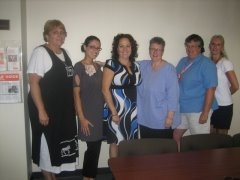
I did a training to be a facilitator for The Wage Project. Here’s a picture of me and the other trainees. Basically what this means is that I can teach junior & senior college women about how to benchmark and negotiate their salaries as they get out of school. The average woman with a college degree will lose a million dollars over her lifetime because of wage inequity. Dr. Murphy’s book Getting Even: Why Women Don’t Get Paid Like Men and What to do About it researches and exposes pay inequity in depth. Her website is incredible. I saw Dr. Murphy speak at the Massachusetts Women in Public Higher Education Conference. I was so moved by her talk that I jumped on board when asked by our local YWCA if we wanted to be a campus pilot for the Wage Project. www.wageproject.org
Hannah Crowley: A Little Known Playwright Ahead of Her Time
My dear friend and acting mentor, Ed Shea, a brilliant director and the Artistic Director at 2nd Story Theatre, in Warren, RI asked me to write the scholarly essay for the current production. I was not only honored for the opportunity but thrilled to learn about yet another woman, ahead of her time, who changed the world for many. Check them out at www.2ndstorytheatre.com
Hannah Cowley was one of few women in the 18th Century to make it as a playwright on the English stage, following behind Aphra Behn and Susanna Centlivre. Raised by a bookseller father, she was provided with a basic classical education unknown to most girls of her generation going on to support herself as a playwright, writing thirteen plays. Her entry into playwriting as a career reveals her personal agency as a woman. As the story goes, after a disappointing night at the theatre, Cowley told her husband that she could write a play just as good and did so. The early draft of The Runaway, her first play, was produced at Drury Lane. Her most successful play, The Belle’s Stratagem allowed her to become the breadwinner in her family, another rarity of the time.
The Belle’s Stratagem is also a perfect example of Cowley’s engaged female characters who examine women’s agency, the role of women’s education, and the institution of marriage. This play calls attention to the discrimination of women during a time when women were far from getting the vote in the U.S. or Britain.[i] In Act Two, Scene One, a discussion of women’s oppression ensues reminiscent of Marilyn Frye’s landmark 1982 essay “Oppression,” where she asks readers to consider a birdcage as a metaphor for oppression. When examining one wire at a time, the viewer is unable to see why a bird would not just fly by the wire to leave. Only when one steps back to see the entire cage do they can realize why the bird cannot escape. Frye writes, “It is perfectly obvious that the bird is surrounded by a network of systematically related barriers, no one of which would be the least hindrance to its flight, but which, by their relations to each other, are as confining as the solid walls of a dungeon.” Like that bird in the cage, Lady Frances Touchwood is asked by Mrs. Racket and Miss Ogle if she would like to stay longer to explore London and she replies “I have not the habit of consulting my own wishes.” Never given the opportunity to think for herself, Cowley’s feminists, Mrs. Racket and Miss Ogle, decide to encourage Lady Frances to do so.
Of course Sir George is quite alarmed by Mrs. Racket and Miss Ogle’s desire to take his wife out on the town and a discussion on what makes a “fine lady” ensues between Mrs. Racket and Sir George. His definition amounts to a worldly and independent woman being a traitor to her home and one who is controlled by vanity. Mrs. Racket accuses him of living in the old days and counters his definition by stating that a “fine lady” is one “for whom nature has done much and education more; she has taste, elegance, spirit, understanding . . . a fine lady is the life of conversation, the spirit of society, the joy of the public!” This debate mimics even today’s dualistic stereotype of woman as either Madonna or whore. Sir George implies that all women are alike and states that even Mrs. Racket fails in her proper position of widow. Jumping to her defense, Miss Ogle replies that Sir George wishes for a society of 150 years ago when families had dedicated roles assigned to them.
During this debate, Mr. Flutter enters and reveals that Sir George had let Lady Frances’ bullfinch fly away because he was jealous of her love for the bird. Sir George then tells Mrs. Racket and Miss Ogle that Lady Frances will not be going out with them. Alarmed, she states this is the first time he has used the expression “shall not” in reference to her. Mrs. Racket and Miss Ogle insist she leave with them, even when Lady Frances expresses concern that Sir George is angry. They gently remind her that her husband got rid of her bird and that this moment will define their relationship from now on. Lady Frances agrees, saying “I won’t give up neither. If I should in this instance, he’ll expect it forever.”
Cowley uses the play, with comedic wit and characterization, to deconstruct 18th century courtship, expose oppression in marriage, and explore women’s independence. Yet she simultaneously allows Lady Frances to make a choice about her life and her marriage. At the end of the day, Lady Frances returns to Sir George and tells him she missed him and that she would rather spend her time with him as “Every body about me seem’d happy but every body seem’d in a hurry to be happy somewhere else.” For Cowley, women’s independence is not about being without men, but in having the choice to be with them. Hannah Cowley, while absent from many theatre history texts, was two hundred years ahead of her time.
[i] Women could vote in 1918, two years before U.S. women, but they had to be at least 30 years old. In 1928 they were allowed to vote at the same age as men.
Regulations Thwart Democratic Process
The best part of this one was what I found out about federal regulations. I also love the comments made by a reader on the website. She thinks that global warming is a myth. We just had two tornados in our area for the first time in my life.
With only 156 days left in office, the Bush administration is advocating for a federal regulation expanding the definition of abortion to include contraceptive methods that prevent the implantation of a fertilized egg. Does the average person know what methods this includes? My guess is that many do not. This theory comes from sixteen years working with college students. When I ask college women if they know how their birth control pill prevents pregnancy, many are surprised when I tell them they don’t ovulate. The other contraceptives that prevent ovulation, like the pill, are the Nuvaring, Depo-Provera, and the birth control patch. The IUD (Intrauterine device), one of the oldest methods of birth control, does not prevent ovulation, but prevents a fertilized egg from implanting on the walls of the uterus, as does the Morning After Pill, a high dosage birth control taken within 72 hours of unprotected sex to prevent unwanted pregnancy.
But the core of my commentary today isn’t to educate the readers about the various methods of birth control that stop fertilization. Instead, I want to explore this notion of a federal regulation. Federal regulations are rules enacted by federal agencies. Federal regulations are contained in the Code of Federal Regulations (CFR). Federal regulations generally are published in the Federal Register. When doing a quick internet search of federal regulations, I found www.regulations.gov. This website, “your voice in federal decision-making,” allows the average citizen to comment on regulations being proposed by various federal agencies, like the Department of Health and Human Services. I was neither successful in finding this proposed draft regulation nor clear on how these comments are reviewed nor taken into account and by whom. The only thing I know is that these department and agency heads are appointed by the President of the United States.
The abortion debate and when life begins is irrelevant to me if we have a system of government where regulations can be made that will gravely affect women’s rights to control their fertility outside of the democratic process that we so proudly espouse. Why is there nothing in the media addressing how these regulations are made and why they can be enacted and enforced outside of the regular democratic process?
It is disappointing, but not surprising, that in Bush’s last days in office he would choose to thwart the democratic process and continue to chip away at women’s rights instead of focusing on serious issues of the economy, the war in Iraq and the tragedy of global warming.
MCSW’s Unsung Heroine Awards
I got a really cool award this year, nominated by my colleague, the Executive Director of the YWCA of Southern Massachusetts. I’m nominating her again next year. She has stiffer competition being from New Bedford than I do.
http://www.heraldnews.com/news/x396300662/Local-force-for-feminism-honored-as-Unsung-Heroine
 The Feminist Critic